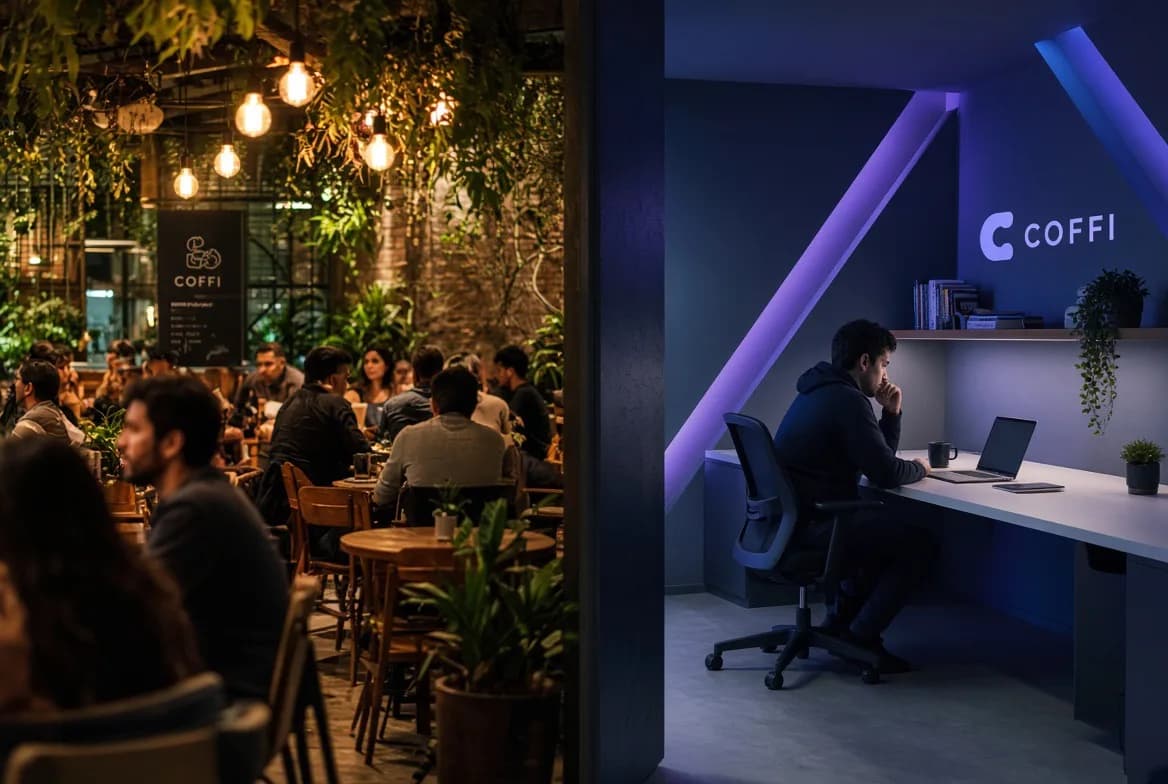
Science has been saying this for years. Context isn’t a decorative detail. It’s one of the strongest forces shaping your focus, your energy, and your results. And in 2026, with clearer data than ever, it’s obvious: the people and teams who perform best aren’t the ones who try harder. They’re the ones who protect the right environment.
What actually separates high-performing teams
In 2026, Ron Friedman and his team studied more than 6,000 knowledge workers. They wanted to know what set exceptional teams (“superteams”) apart from the rest. They looked at gyms, collaboration rooms, ping-pong tables, free coffee, private offices. More than 20 amenities.
Only one showed up consistently: a quiet place where people could concentrate without interruptions.
Members of those high-performing teams were 52% more likely to report access to real focus space. And it wasn’t just perception. They worked in uninterrupted blocks averaging 106 minutes, versus 77 minutes on average teams. The difference wasn’t “more collaboration.” It was the ability to protect deep thinking time.
This matters especially when you work remotely or hybrid. A 2026 meta-analysis of 82 studies found that working from home has a small but real positive effect on productivity — particularly in hybrid setups. But the effect is context-dependent. It’s not home office in the abstract. It’s the specific environment you’re in when you try to do the work.
Noise, crowd density, light quality, even scents change cognitive performance. Recent studies show that certain aromas (rosemary, lemon, mint) improve scores on cognitive tasks, and that intelligible conversation noise is especially costly for concentration and verbal reasoning. The environment is never neutral. It’s either pushing you forward or holding you back.
The same café isn’t the same café
In Medellín this is obvious. Pergamino can be perfect on a Tuesday at 9:30 a.m. and a disaster at 12:30. Bistrea in Belén or some quieter spots in Laureles tend to hold focus better. Hotel lobbies have become the hack for people who need guaranteed quiet. It’s not that some places are “better” than others. They serve different needs.
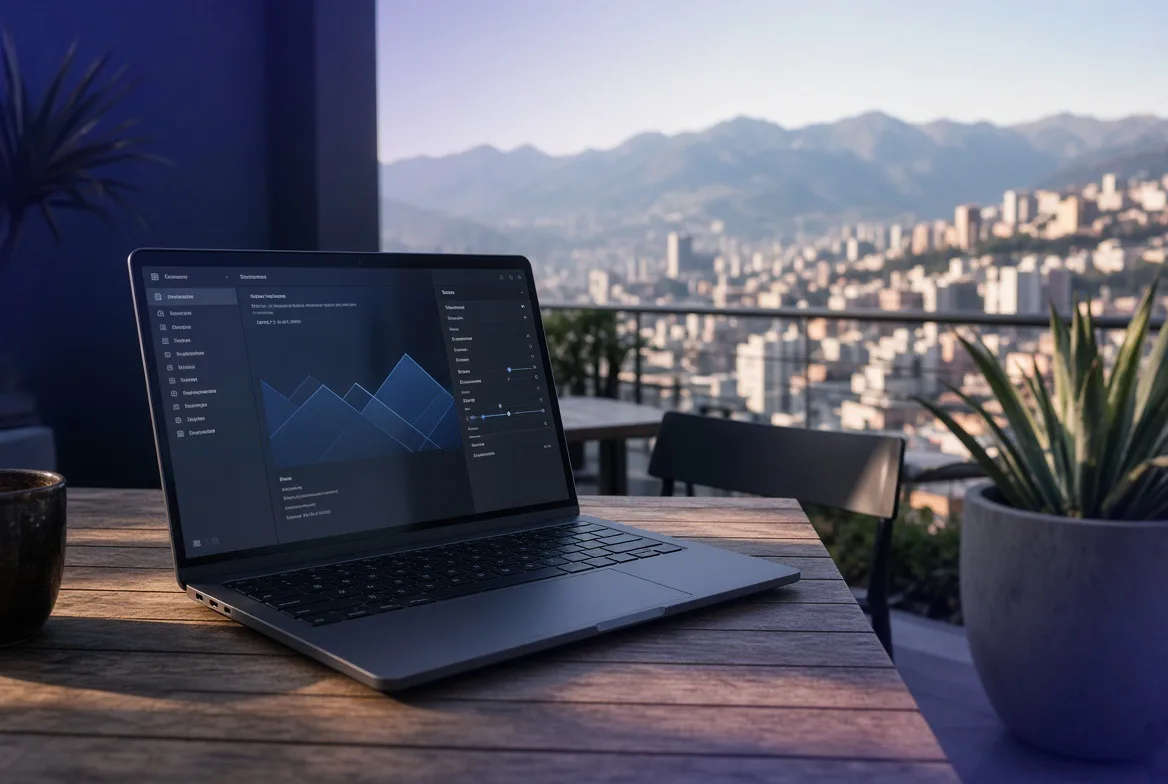
One day you need deep silence to write or design. The next you need a bit of background energy for brainstorming or calls. The day after that you want a space with similar people so you don’t feel alone. If you always pick the same place out of habit, you’re betting that today’s need matches that space’s average. It almost never does.
Remote workers in the city live this: hours lost in the wrong café, Wi-Fi that drops right when you need it, or a vibe that drains you instead of feeding you. It’s not a lack of discipline. It’s a lack of real-time context.
How to protect the environment you actually need
High-performing teams don’t wait for the perfect place to appear. They actively design for it:
- Protected focus blocks (no messages, no interruptions).
- Meeting-free days or windows.
- Spaces (or moments) where noise and density stay under control.
You can do the same even without a fixed office. The question isn’t “Where do I work today?” It’s “What do I need today, and which space in the city is giving me that right now?”
That means looking beyond static Google Maps lists. It means knowing, in the moment, whether a place is full, quiet, well-connected, or carrying the kind of energy that fits your task. It means being able to move when the context changes — because it does.
Context is the infrastructure that was missing
For years remote work gave us freedom of place, but not the intelligence to choose well. We ended up improvising. Testing. Losing hours in the wrong environment. Then blaming ourselves for not being more disciplined.
The 2026 evidence is clear: environment shapes results. The best teams protect it. The remote workers who thrive aren’t the ones who stay in the same café every day. They’re the ones who can read what they need today and find the space that delivers it.
That’s exactly what Coffi does: real-time matching based on your context (intent, energy, type of work) and the actual conditions of the space (noise, density, vibe, Wi-Fi). Not static lists. Living context.
Because the right place today isn’t the usual one. And your productivity doesn’t depend on how hard you push. It depends on where you are.

Be where you thrive.