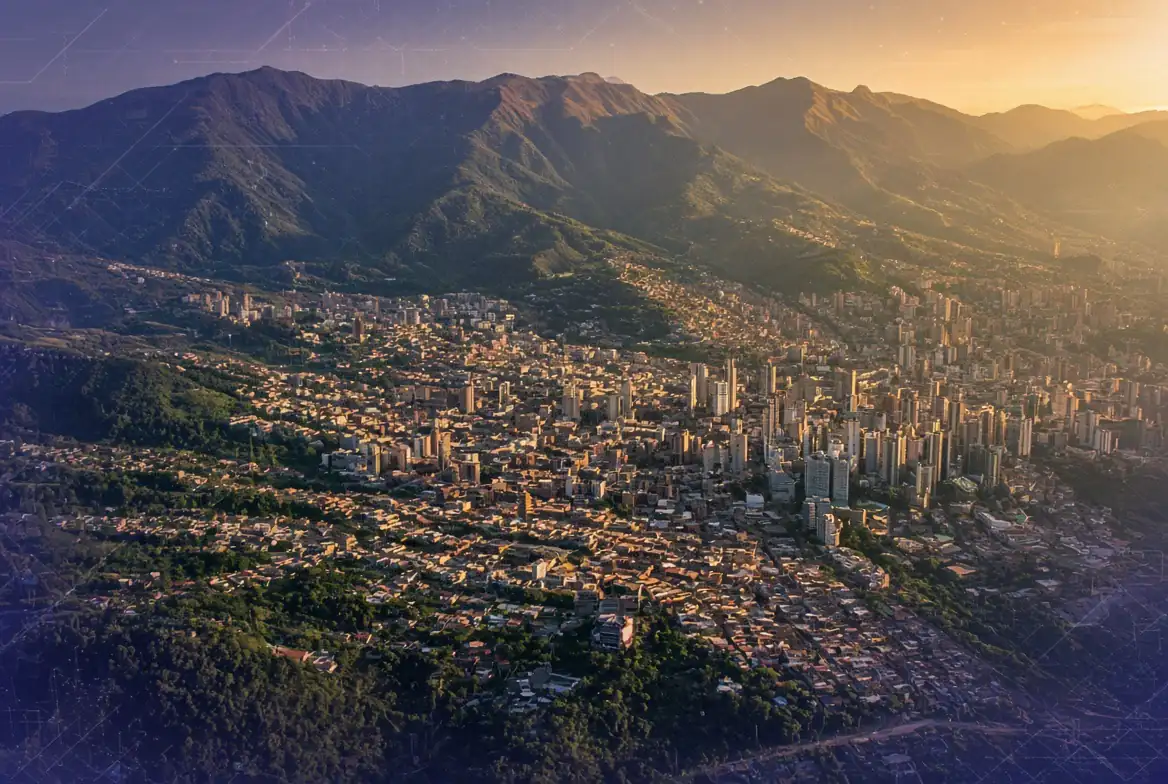
It’s not that there aren’t enough options. It’s that the city has several rhythms running at the same time — and yours changes depending on the day.
Medellín in 2026 is not the same nomad destination it was five years ago. It’s a real tech hub. According to Ruta N data, the city has more than 740 active startups generating over 17,000 direct jobs. In 2026 so far, they’ve raised around $216 million in investment — 38% more than all of 2025. It concentrates 24% of Colombia’s DeepTech startups and a significant share of talent in software, energy, and fintech.
That changes the kind of people who are here. Not just passing nomads. Local founders, designers who stayed, engineers who arrived for a project and ended up staying for months.
And that, in turn, changes how the city feels when you open the map and look for where to work today.
Two main rhythms (and several nuances)
El Poblado is still the easy landing. Provenza and Manila have a high density of coworking spaces, cafés with decent wifi, and people who speak English. It’s comfortable when you first arrive and don’t want to think. But it’s also more expensive, steeper, and sometimes noisier than you need.
Laureles is the other pole. Flat, walkable, with a more local-expat mix and friendlier prices. People who stay longer than a month often end up here or nearby. Coworking spaces are smaller, neighborhood life is more present, and the rhythm is less “international hub” and more “real city.”
Neither is better in the abstract. It depends on what you’re bringing today:
If you need deep focus and relative quiet, a small coworking space in Laureles or a calm café in the area usually wins.
If you arrived yesterday and want to cross paths with people who are also just starting out, Poblado speeds things up.
If your energy is low and you want something that doesn’t demand socializing, the context changes again.
The difference isn’t in “the best neighborhood.” It’s in knowing which of those rhythms matches what you need right now.
The environment still decides the day
2026 productivity data keeps pointing in the same direction: remote and hybrid work can be more productive, but the real environment matters. Noise, density of people, wifi quality in the moment, and overall vibe aren’t details. They’re the filter that makes hours count or dissolve.
In Medellín this is especially clear. A deep-work day in a place with loud conversations and constant food deliveries is different from one where the noise level is low and the people around you are in a similar mode. The same applies if what you need is brainstorming or an important call.
Google Maps tells you there’s a café nearby. It doesn’t tell you if it’s full of loud conversations today or if the wifi is saturated. It also doesn’t tell you who else is working there right now.
How to thrive in the city (without improvising every morning)
The simplest way not to waste the day is to treat Medellín as what it is: a city with several simultaneous contexts, not a single “place for nomads.”
A few practices that work:
Define the intent of the day before you leave (focus, call, light exploration, social).
Choose neighborhood and type of space based on that intent, not on what you used yesterday.
Rotate between 2–3 known places instead of searching for “the perfect spot” every time.
Pay attention to the hours: many spaces change energy between morning and afternoon.
When the day ends, the rhythm changes too. Coffi Nights exists precisely for that: helping you disconnect without losing contact with what’s happening in the city. Work and life don’t have to compete if the environment supports you in both.
Coffi in this context
Coffi isn’t a coworking directory. It’s the layer that connects your context of the moment (what you need to do, how you feel, what kind of environment serves you) with the spaces that are actually functioning that way right now.
In a city like Medellín, where there are many options and several rhythms coexisting, that difference is noticeable. It saves you the trial-and-error of the first weeks and leaves you with more energy for what you actually came to do — or for what you want to live after 6 pm.
The city is alive. The tech ecosystem is growing. The remote worker community is too. What’s missing isn’t more places. It’s knowing, with clarity, where to thrive today.

Be where you thrive.